Squeeze Trade Management
Why Squeeze Trades Require Special Management
Short squeeze trades are fundamentally different from standard Volatility Box setups in several critical ways that demand specialized management approaches. They involve higher volatility with intraday swings that can exceed 10-20%, higher risk due to news-driven moves and gap potential, and higher reward with moves often reaching 10-30% in days instead of the typical 2-5% VB target. This unique risk-reward profile requires different position sizing, stop placement, and exit strategies compared to conventional swing trades.
This article covers the complete lifecycle of a squeeze trade from initial entry tactics through staged profit-taking to final exit strategies when the squeeze momentum fizzles. Understanding how to manage each phase of the trade is essential for capturing the outsized gains while avoiding the catastrophic losses that can occur when squeezes reverse violently. Proper management separates traders who profit from squeezes from those who give back all gains or worse.
Pre-Entry: Confirming the Setup
Before entering any squeeze trade, you must verify that all essential conditions are met to confirm this is a genuine squeeze opportunity and not just a stock with high short interest. Missing even one key criterion dramatically reduces the probability of success and increases the risk of capital loss. A disciplined pre-entry checklist prevents impulsive trades based on incomplete setups that look promising but lack proper confirmation.
Squeeze Setup Checklist
| Criteria | Requirement | Why It Matters |
|---|---|---|
| Short Interest | >15% of float | Enough shorts to create squeeze pressure |
| Days to Cover | 3+ days | Shorts are trapped, can’t exit quickly |
| VB Signal | LONG with 75+ conviction | Technical reversal confirmation |
| Market Pulse | Green or Yellow (accumulation) | Institutional buying starting |
| Technical Setup | Oversold (RSI <30) or bounce off support | Risk/reward favorable |
| Volume | 2x average or increasing | Buying pressure building |
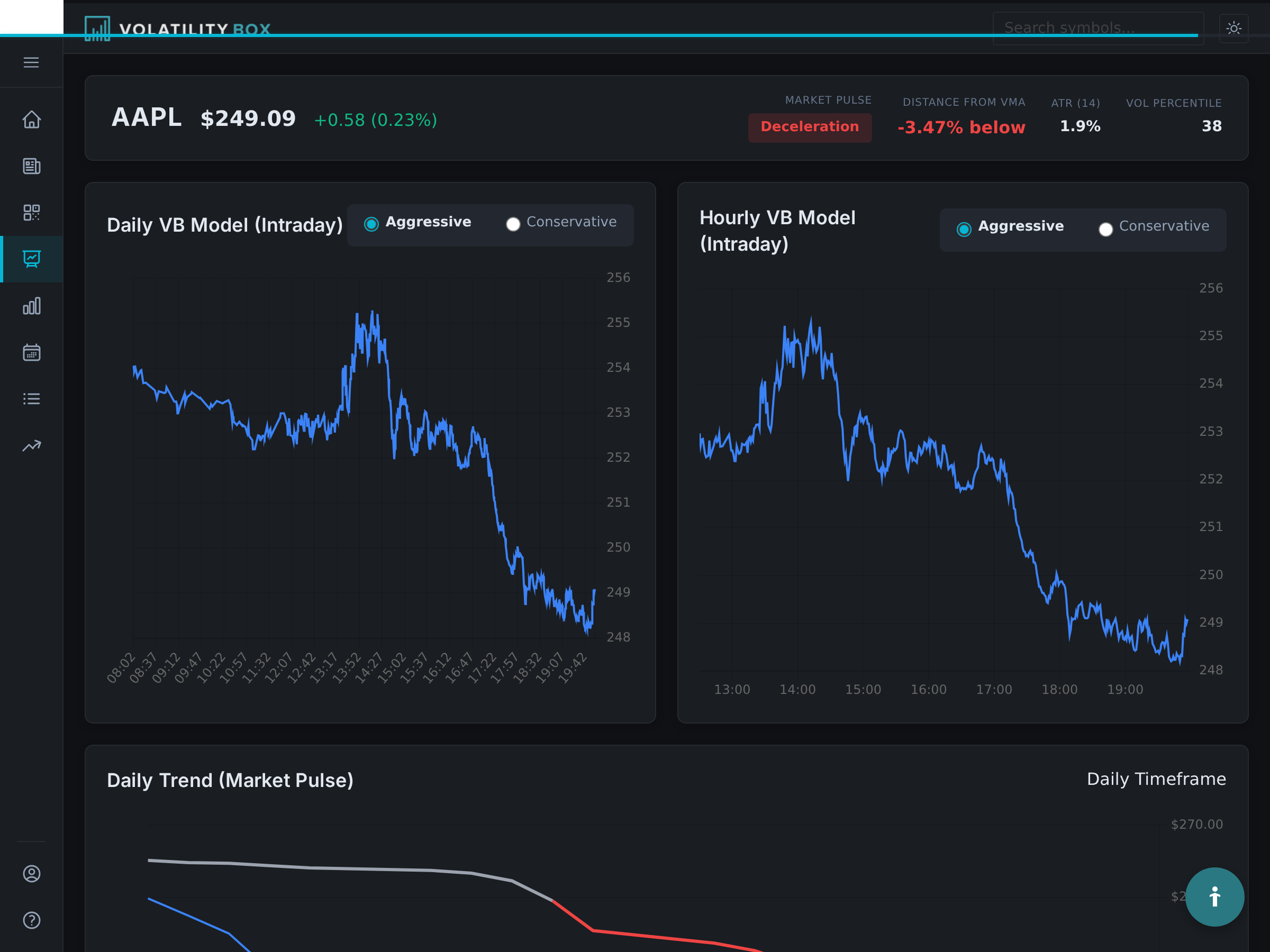
If ANY single criterion from this checklist is missing, skip the trade without exception or rationalization. Squeeze trades without proper setup have extremely low probability of success and high probability of significant loss. The temptation to jump into a squeeze early is strong, but patience to wait for complete confirmation is what separates profitable squeeze traders from those who blow up accounts chasing hype.
Entry Tactics: Wait for Technical Reversal
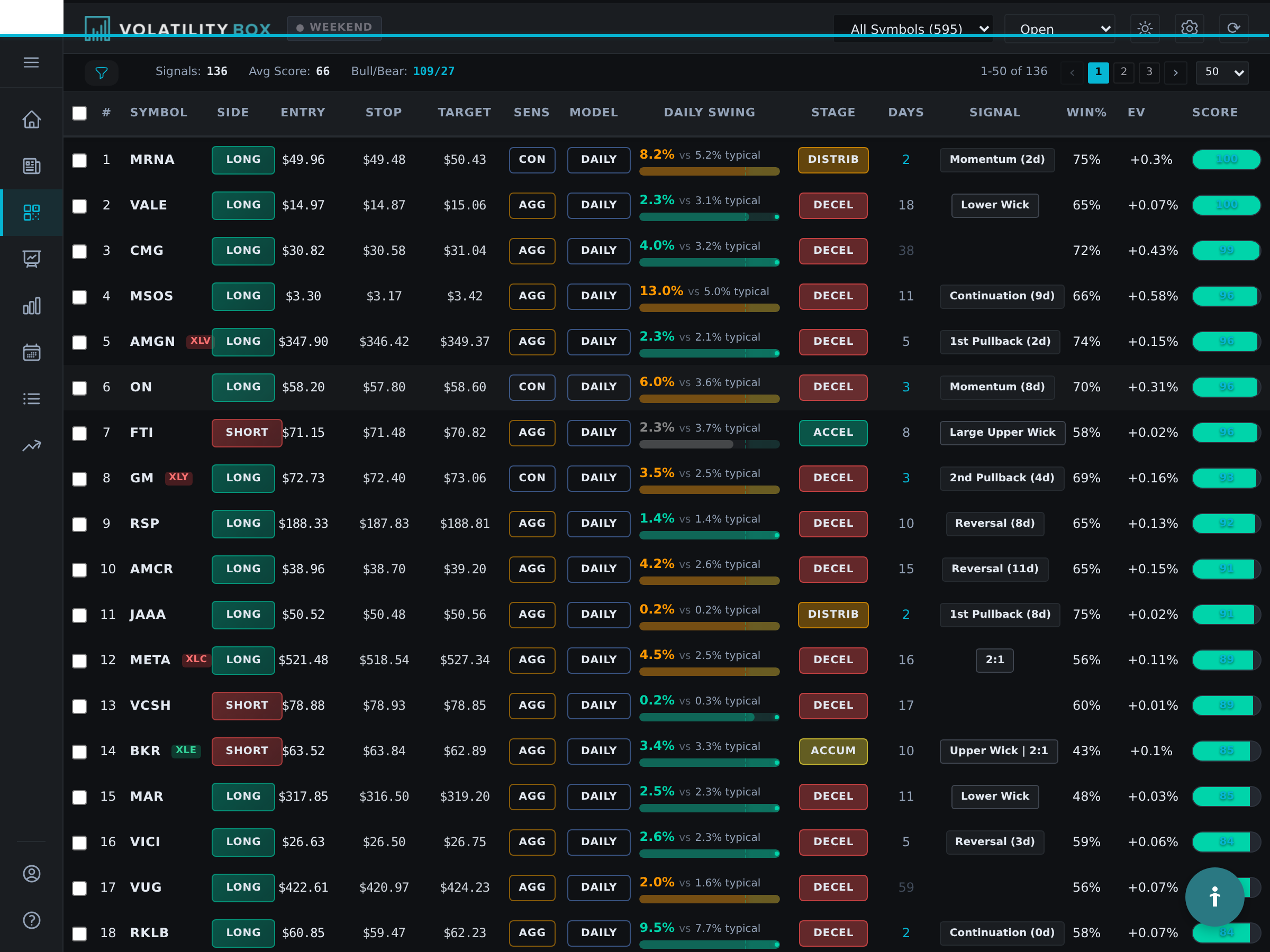
Don’t buy a stock just because short interest is high, as many heavily shorted stocks continue declining for months or even years. Instead, wait patiently for technical confirmation that the reversal is beginning and short-covering is actually starting to occur. The combination of fundamental squeeze potential plus technical reversal creates the high-probability setup worth your capital and risk.
Entry Timing
- Day 1: Stock bounces off support or VB entry level with volume
- Confirmation: First green day after 3+ red days, or gap up on news
- VB Signal: LONG signal appears at bounce level
- Entry: Buy at VB entry price on confirmation day
Example: XYZ Squeeze Entry
XYZ has 22% short interest and 5.2 days to cover, indicating significant short positioning that will be difficult to unwind quickly. The stock has dropped from $45 to $38 over 10 days in a steady downtrend. On Day 11, a Volatility Box LONG signal appears at $38.50 entry with 78 conviction, indicating technical reversal setup.
Market Pulse shows Yellow color indicating accumulation is beginning, and RSI reads 28 showing oversold conditions. Volume increases to 1.8x average, confirming buying pressure is emerging. You enter LONG at $38.50 with the VB stop at $37.20 protecting against further downside and initial target at $41.80 based on VB levels.
| Metric | Value |
|---|---|
| Entry | $38.50 |
| VB Stop | $37.20 |
| VB Target | $41.80 |
| Extended Target (if squeeze ignites) | $48-52 (previous resistance) |
| Risk | $1.30/share |
| Initial Reward | $3.30/share |
Position Sizing: 50% Reduction for Volatility
Squeeze trades are inherently more volatile than standard VB setups, with potential for overnight gaps and intraday swings that far exceed normal ranges. To account for this increased volatility and risk, reduce your position size to 50% of what you would normally use for a swing trade. This smaller size protects you from catastrophic loss while still allowing meaningful profit if the squeeze develops as expected.
Standard vs Squeeze Position Sizing
| Setup Type | Risk Per Trade | Example (1% risk on $50k) |
|---|---|---|
| Standard VB Day Trade | 1% of account | $500 risk |
| VB Swing Trade | 2% of account | $1,000 risk |
| Squeeze Trade | 1% of account (50% of swing size) | $500 risk |
Why Smaller Size?
- Squeeze trades can gap 10%+ against you overnight
- Stops may not fill at VB stop level (slippage)
- News-driven moves are unpredictable
- You want room to add if squeeze accelerates
Initial Stop Placement
Use the Volatility Box stop level OR the most recent swing low, whichever is closer to your entry price and provides better risk-reward. The goal is protecting capital while giving the trade reasonable room to work, which is challenging in volatile squeeze situations. Proper stop placement balances the need for protection against getting stopped out prematurely on normal volatility.
Stop Options
- VB Stop: Use if it’s within 2-4% of entry (normal for Volatility Box signals)
- Swing Low: Use if recent low is tighter than VB stop (e.g., 1.5% away)
- Hard Rule: Never risk >5% on a squeeze trade (too much volatility)
Example Stop Placement
Your entry is at $38.50 with VB stop at $37.20, representing 3.4% risk from entry. However, yesterday’s swing low sits at $37.80, which is only 1.8% risk from entry and provides a tighter, more efficient stop. You use the swing low at $37.80 as your stop since it offers better risk-reward while still being below a clear technical level that should hold if the squeeze is legitimate.
Profit Taking: Staged Exits
Don’t try to catch the entire squeeze from bottom to top, as that’s nearly impossible and leads to giving back most gains. Instead, take profits in multiple stages as the trade moves in your favor, locking in gains progressively. This staged exit approach ensures you capture meaningful profit even if the squeeze doesn’t fully materialize while still maintaining exposure if it does accelerate into a major move.
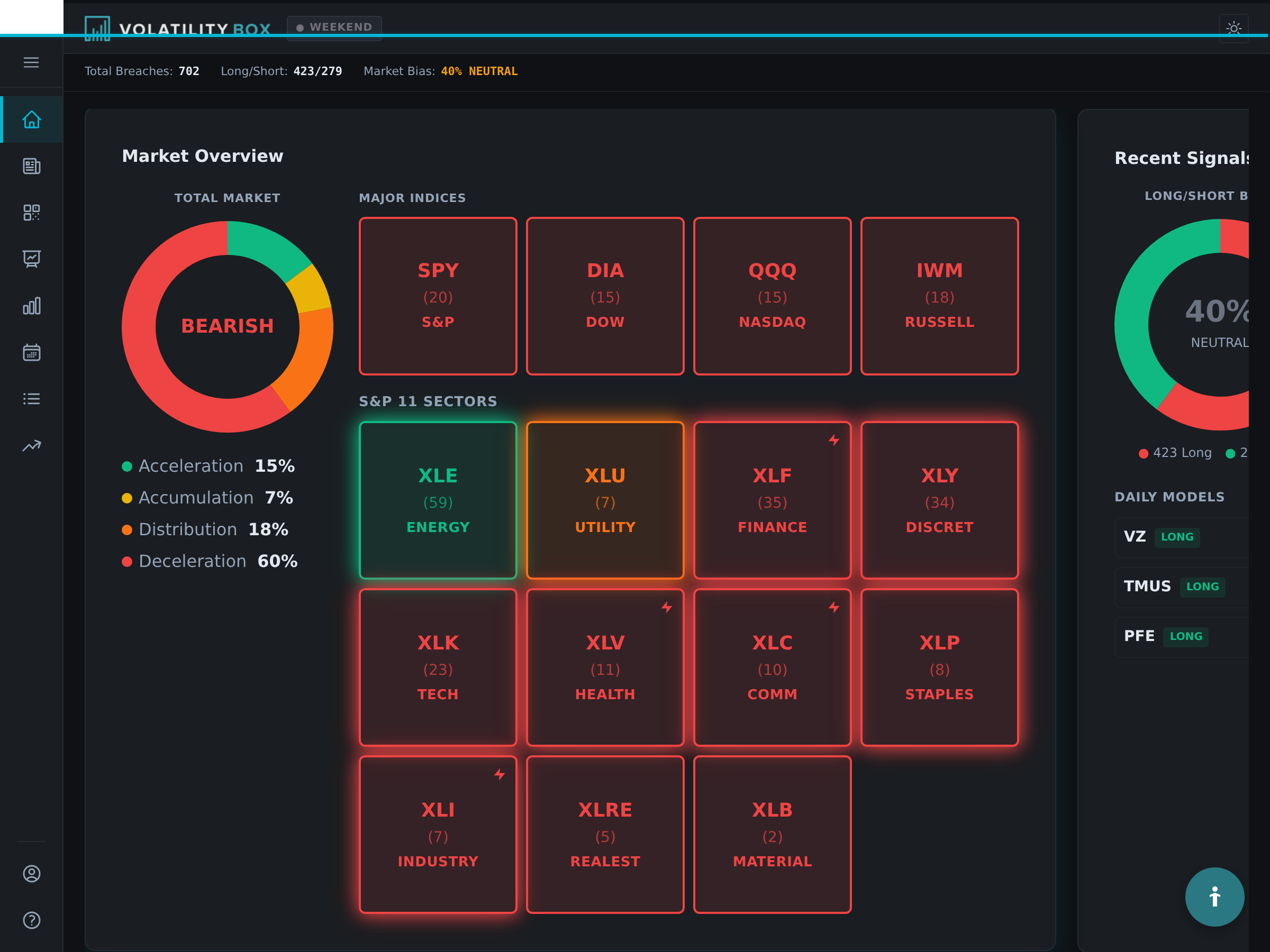
3-Stage Exit Plan
| Stage | Price Target | Exit % | Action |
|---|---|---|---|
| 1. VB Target | VB target price | 33% | Lock in initial profit |
| 2. Resistance Level | Previous high or key resistance | 33% | Reduce exposure before potential stall |
| 3. Trail or Exit | If squeeze ignites, trail with 8 EMA | 34% | Capture extended move if it happens |
Example: XYZ 3-Stage Exit
You entered 300 shares at $38.50 anticipating a squeeze. On Day 3, price hits the VB target of $41.80, and you exit 33% of your position (100 shares) to lock in $3.30 per share profit on that portion. On Day 5, price reaches resistance at $45, and you exit another 33% (100 shares) to capture $6.50 per share on that portion, significantly reducing your exposure.
By Day 7, price has accelerated to $48 and is climbing with strong volume, confirming the squeeze is developing. You trail the remaining 34% (100 shares) with the 8 EMA as your stop and ride the momentum higher. You’re eventually stopped out when price closes below the 8 EMA at $46 on Day 9.
Total profit calculation: (100 x $3.30) + (100 x $6.50) + (100 x $7.50) = $1,730 on initial capital of $11,550, representing a 15% gain in just 7 trading days. This staged exit captured most of the move while protecting against giving back gains if the squeeze had reversed earlier.
Trailing Stops: Protecting Profits
Once you’re in profit on a squeeze trade, protecting those gains becomes the primary objective while still allowing room for extended moves. Trailing stops accomplish both goals by locking in profits as the trade moves favorably while giving the position breathing room for normal volatility. The key is selecting the appropriate trailing method for the speed and magnitude of the squeeze development.
Trailing Stop Methods
- 8 EMA (Daily Chart):
- Once price is +3% profit, trail with 8 EMA
- Exit when daily close below 8 EMA
- Best for extended squeezes (5+ days)
- Previous Day’s Low:
- Once +2% profit, move stop to yesterday’s low
- Update daily at 4:00 PM close
- Simple, effective for volatile moves
- Fixed Percentage:
- Trail stop 5% below current high
- As price climbs, stop follows
- Good for parabolic moves
Example: 8 EMA Trailing Stop
| Day | Close Price | 8 EMA | Trailing Stop | Action |
|---|---|---|---|---|
| 1 | $38.50 | $37.80 | $37.20 (VB stop) | Hold |
| 3 | $41.80 | $39.50 | $38.50 (break-even) | Hold |
| 5 | $45.00 | $41.80 | $41.80 (8 EMA) | Hold |
| 7 | $48.20 | $44.50 | $44.50 (8 EMA) | Hold |
| 8 | $46.10 | $45.00 | $44.50 (8 EMA) | EXIT (closed below 8 EMA) |
When the Squeeze Fizzles: Early Exit Signals
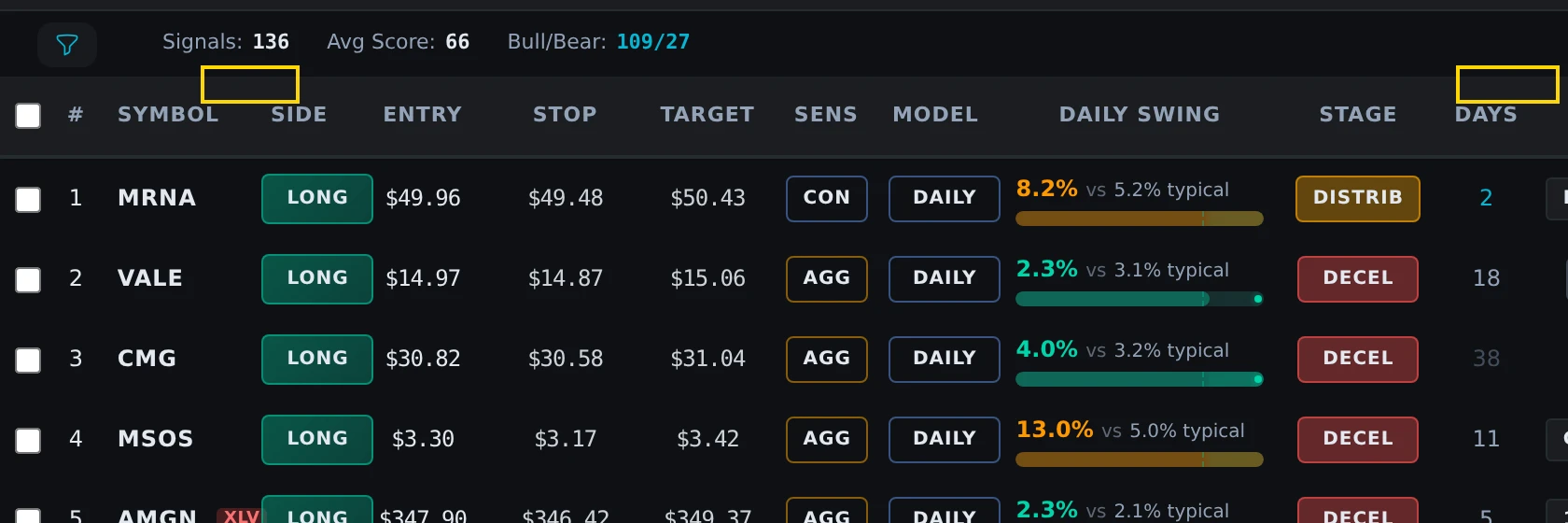
Not every high-short-interest stock actually squeezes, and recognizing when a setup is failing allows you to exit early and preserve capital. These warning signs indicate the anticipated squeeze isn’t developing and you should exit before losses accumulate. Being honest about failed setups and cutting losses quickly is essential for long-term squeeze trading profitability.
Exit Immediately If:
- Volume dries up: Volume drops to <50% average after initial bounce
- Market Pulse turns red: Accumulation stage reverses to distribution
- Gap down >3%: Pre-market gap down on bad news (exit at open, don’t wait for stop)
- VB stop hit: Respect your stop, no exceptions
- No follow-through: After 3 days, price hasn’t moved +2% (dead trade)
Example: Failed Squeeze
You entered at $38.50 anticipating a squeeze based on high short interest and technical reversal. Day 1 closes at $38.90, up 1% from entry, showing some initial buying pressure. Day 2 closes at $38.70, down 0.5%, showing hesitation and lack of momentum. Day 3 closes at $38.60, down another 0.8%, confirming the squeeze isn’t developing.
Volume has been decreasing each day rather than increasing, and Market Pulse has turned from Yellow to Orange, indicating distribution is beginning. You exit at $38.60 for a tiny $0.10 per share profit, essentially breakeven after commissions. While disappointing, this early recognition saves you from a potential larger loss if the failed setup continues declining, and you can redeploy that capital into better opportunities.
Managing Multi-Week Squeezes
Some powerful squeezes develop over 2-4 weeks rather than just a few days, requiring sustained management and discipline. These extended squeezes offer the largest profit potential but also test your patience and ability to let winners run. The key is balancing the desire to lock in profits with the discipline to stay positioned while the squeeze continues developing.
Weekly Management Checklist
- Sunday Evening: Check short interest update (has it decreased? Squeeze may be ending)
- Monday Open: Review weekend news and pre-market price action
- Mid-Week: Check if VB levels updated (new weekly model)
- Friday Close: Decide on weekend hold (reduce size if holding)
Weekend Hold Decision
- Hold if: Position +5% profit, strong momentum, no earnings next week
- Exit if: Position <+3% profit, momentum slowing, high beta stock
- Reduce if: Position +10%+ profit, take 50% off to lock gains
Risk Management for Squeeze Trades
Squeeze trades can be extremely lucrative but also dangerous without strict risk management discipline. The volatility and unpredictability of squeeze moves means one bad trade can erase weeks of gains if you’re not careful. These risk rules protect you from the downside while still allowing you to participate in the upside potential that makes squeeze trading attractive.
Risk Rules
- Max 1 squeeze trade at a time: Don’t over-expose to volatility
- Max 20% of portfolio in squeeze setups: Even if you find 5 good ones, limit exposure
- No averaging down: If stop hit, exit. Don’t add to loser
- Check earnings calendar: Never hold through earnings on squeeze trades
- Monitor short interest weekly: If SI drops below 10%, exit (squeeze over)
Common Squeeze Trade Mistakes
Understanding the most common errors in squeeze trading helps you avoid them and improve your results. These mistakes are seductive because they feel right in the moment but lead to poor outcomes over time. Being aware of these patterns allows you to recognize them when you’re tempted and make better decisions.
- Buying on short interest alone: Need technical setup + VB signal confirmation
- Holding too long: Greed kills. Take profits in stages
- Ignoring volume: Volume must increase for squeeze to work
- Oversizing position: Use 50% of normal swing size
- No stop loss: “It’s a squeeze, it’ll come back” = blown account
- Chasing parabolic moves: Don’t FOMO into squeeze after +20% move
Tracking Squeeze Trade Performance
Keep separate statistics for squeeze trades versus standard Volatility Box trades because they have fundamentally different characteristics and expectations. This separation allows you to accurately assess whether your squeeze trading approach is profitable and where you need to improve. Over time, you’ll develop insights about which squeeze setups work best for your style and risk tolerance.
Metrics to Track
| Metric | Target for Squeeze Trades |
|---|---|
| Win Rate | 50-60% (lower than standard VB) |
| Average Winner | +8% to +15% |
| Average Loser | -2% to -4% |
| R/R Ratio | 3:1 minimum |
| Hold Time | 5-14 days |
Summary: Squeeze Trade Management Checklist
- Verify setup: >15% SI, 3+ DTC, VB signal 75+, technical reversal
- Wait for entry confirmation: bounce with volume
- Position size: 50% of normal swing size (1% account risk)
- Stop placement: VB stop or swing low (max 5% risk)
- Stage 1 exit: Take 33% off at VB target
- Stage 2 exit: Take 33% off at resistance
- Stage 3: Trail remaining 34% with 8 EMA or previous day low
- Exit early if: volume dries up, MP turns red, no movement after 3 days
- Weekend holds: Only if +5% profit and strong momentum
- Max 1 squeeze trade at a time
Squeeze trades offer outsized returns when managed properly with discipline and systematic processes. The key is entering only on complete technical confirmation, exiting in stages to lock in profits progressively, and always respecting your stops without exception. By following this structured management approach, you can capture the substantial upside potential of short squeezes while protecting yourself from the dramatic reversals that often follow parabolic moves.
Was this article helpful?
Still need help?
Can't find what you're looking for? Our support team is here to help.
Contact Support