Analyzing equity curves
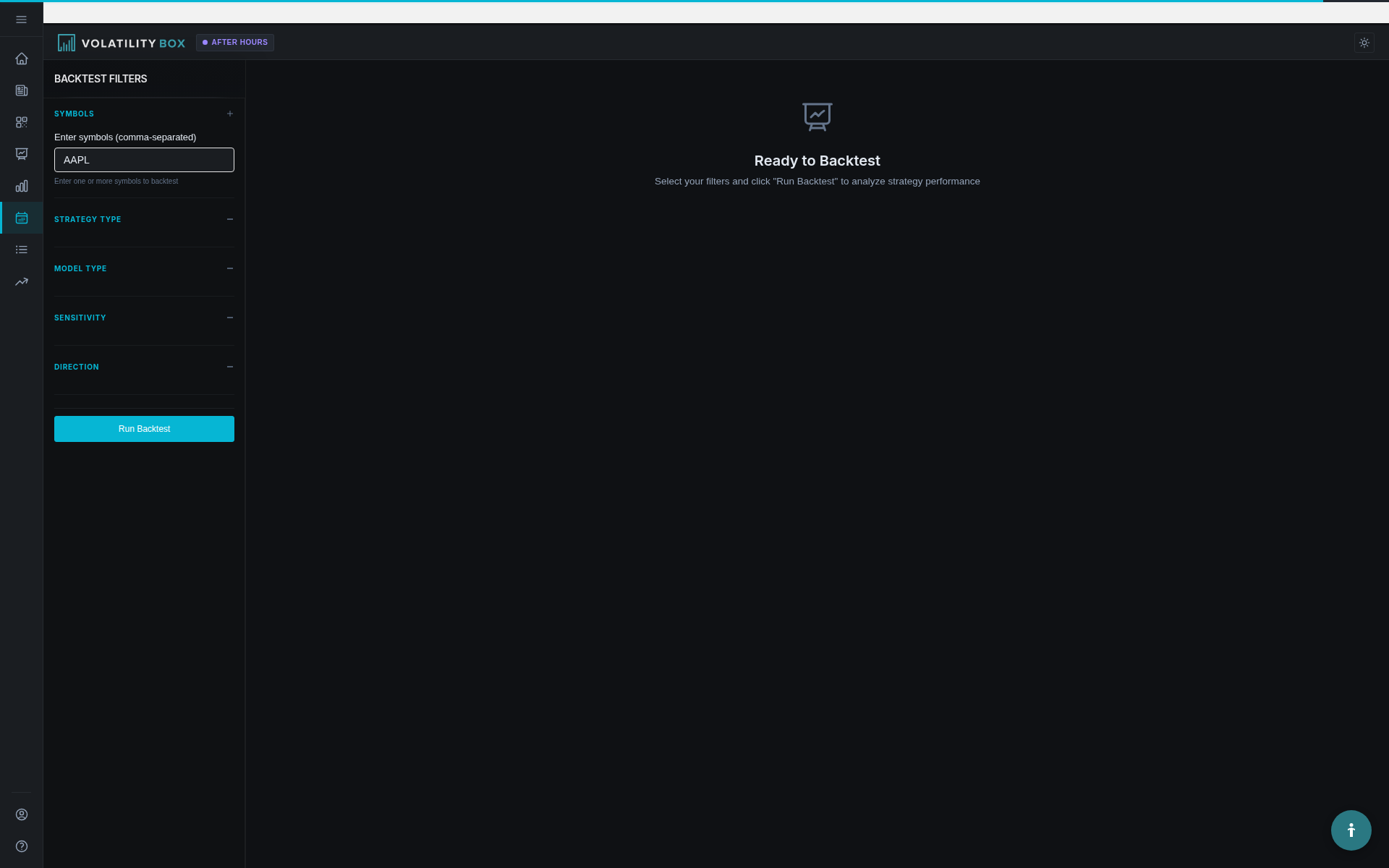
The backtester fills three areas when it runs: the headline numbers at the top, the cumulative profit-and-loss curve in the middle, and the trade log below it. The headline numbers tell you whether a setup made money; the equity curve and trade log tell you how, which is what decides whether a strategy is one you can actually hold through. This covers how to read all three.
The headline numbers
Two numbers carry most of the weight: expectancy and profit factor. A positive expectancy means the setup made money per trade on average over the backtest. A profit factor above one means more dollars were won than lost. Both are colored when they are favorable, so a quick glance tells you whether the run is worth a closer look. Win rate sits alongside them, but a high win rate with weak expectancy still loses money, which is why expectancy and profit factor lead. See Win Rate vs Expectancy for why the two can disagree.
Read these as historical results over the tested period, not a forecast. They describe how the model performed on that symbol across that date range. A different range, or a different market regime, can produce different numbers.
Reading the equity curve
The cumulative P&L curve is a running total of every trade in the backtest, in order. It starts at zero, rises after a winner, and falls after a loser, drawing the path the account balance took to reach the final result. What you want to see is a steady climb up to the right: edge captured across the period rather than concentrated in a few trades.
The shape carries information the headline numbers hide. A line that climbs steadily means the edge showed up consistently. A line that is flat for a long stretch and then jumps means a couple of trades did the work and the rest did little. A line with deep dips means the strategy went through stretches that would test your discipline in live trading. Two backtests can share a win rate and a total profit and still have very different curves; the curve is what tells you whether the path was tradeable.
The trade log
Below the curve, the trade log lists every time the setup fired over the backtest. Each row is one trade, so the log is where the headline numbers and the curve come from. Use it to see the individual results behind the summary: the size of the typical winner against the typical loser, and whether the wins and losses are close in size or whether one or two outsized trades are carrying the run.
This matters because the same expectancy can come from a steady stream of similar-sized trades or from a few large winners offsetting many small losers. The first is more likely to repeat; the second leans on rare events. Scanning the log tells you which one you are looking at.
Using the results to decide
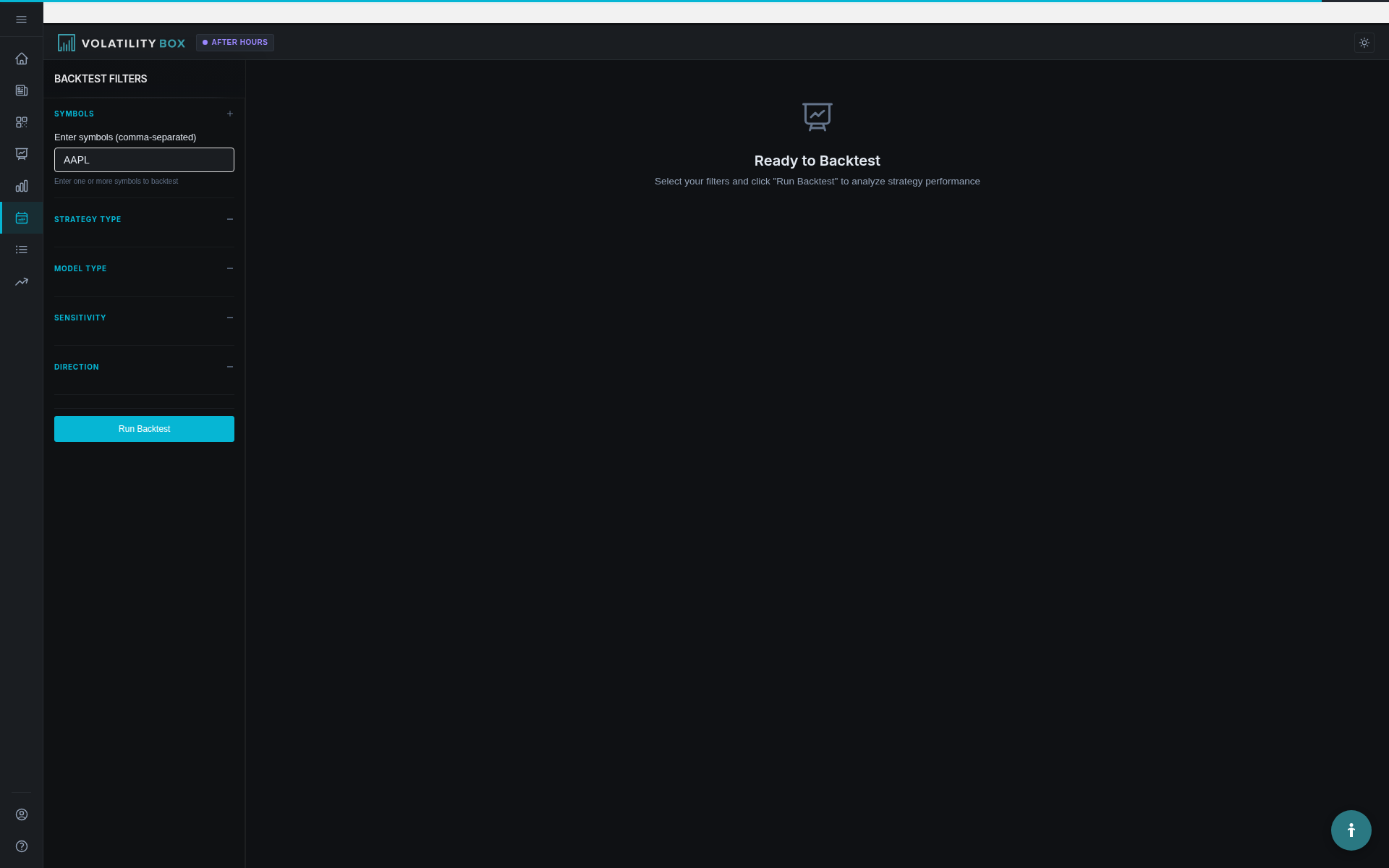
The backtester is a research tool, not a scoreboard. Run a name a few ways and compare. The same symbol on the aggressive models versus the conservative models, or on the daily versus the hourly, often tells you where the edge actually lives: which model to lean on for that name, and which to treat as an early alert rather than an entry. A name with a strong daily curve and a mediocre hourly curve is a daily name; the reverse points you to the hourly models. Those comparisons, not any single run, are what turn the backtester into a way to decide where on a setup you want to participate.
Related
Was this article helpful?
Still need help?
Can't find what you're looking for? Our support team is here to help.
Contact Support