Futures vs stock Volatility Box
Volatility Box comes in two products: the Stock Volatility Box for equities and ETFs, and a separate Futures Volatility Box for futures contracts. Both model where price is and is not likely to go given current volatility, and both plot the same kind of cloud levels. They differ in the instruments they cover and the trading hours they are built around. This page covers what these docs apply to and where the products diverge.
What these docs cover
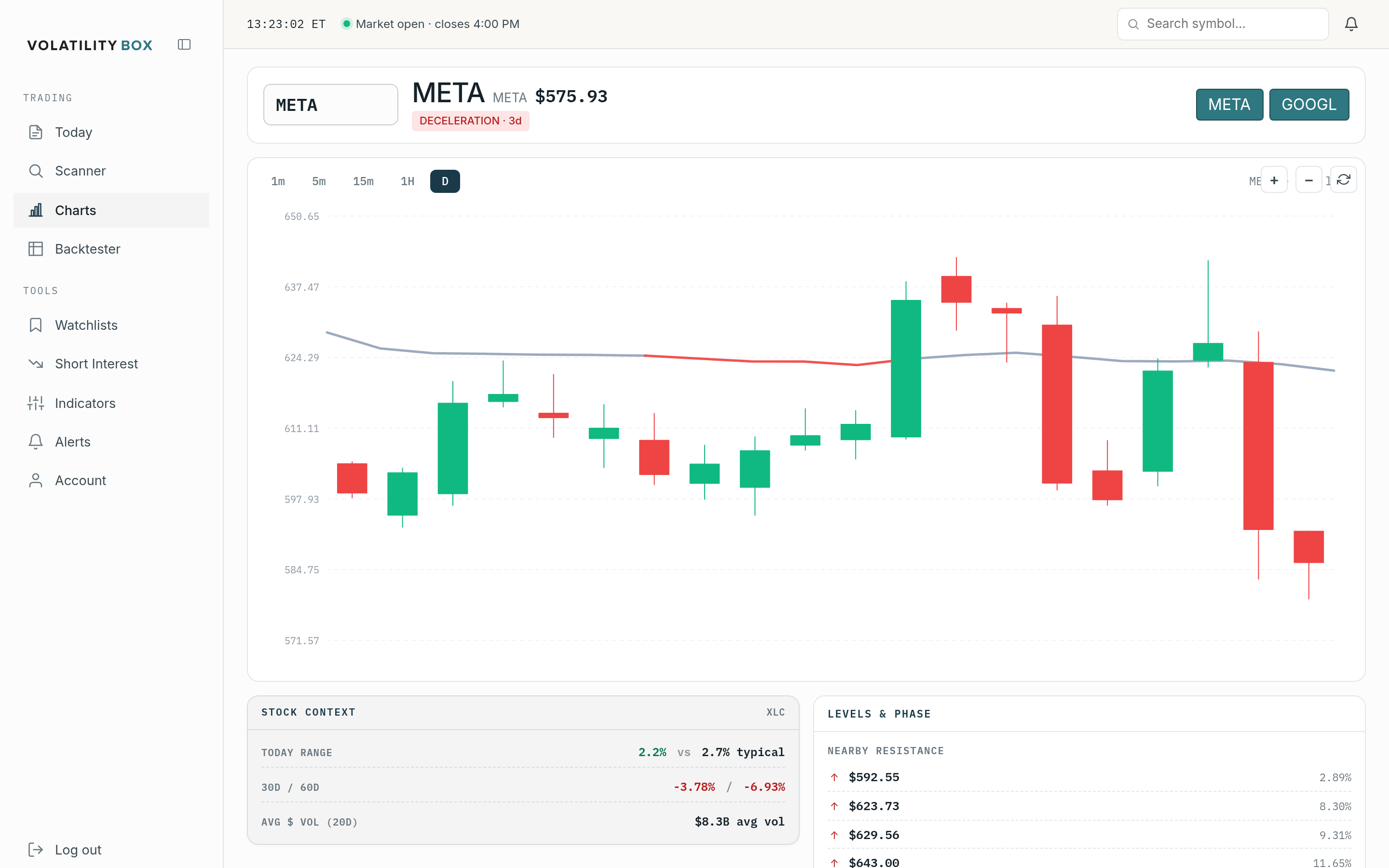
This documentation is for the Stock Volatility Box. The platform pages, the Scanner, the indicator bundle, and the setups described throughout apply to equities and ETFs. The Futures Volatility Box is a separate product with its own coverage; if you trade futures, confirm its current specifications on its own product material rather than assuming they match the stock side.
Stock Volatility Box
The Stock Volatility Box covers equities and ETFs and is built around regular US market hours. It supports both intraday and swing trading through two model families:
- Daily models give one level for the whole day. Harder to reach, weightier when hit, oriented toward swings of one to five days.
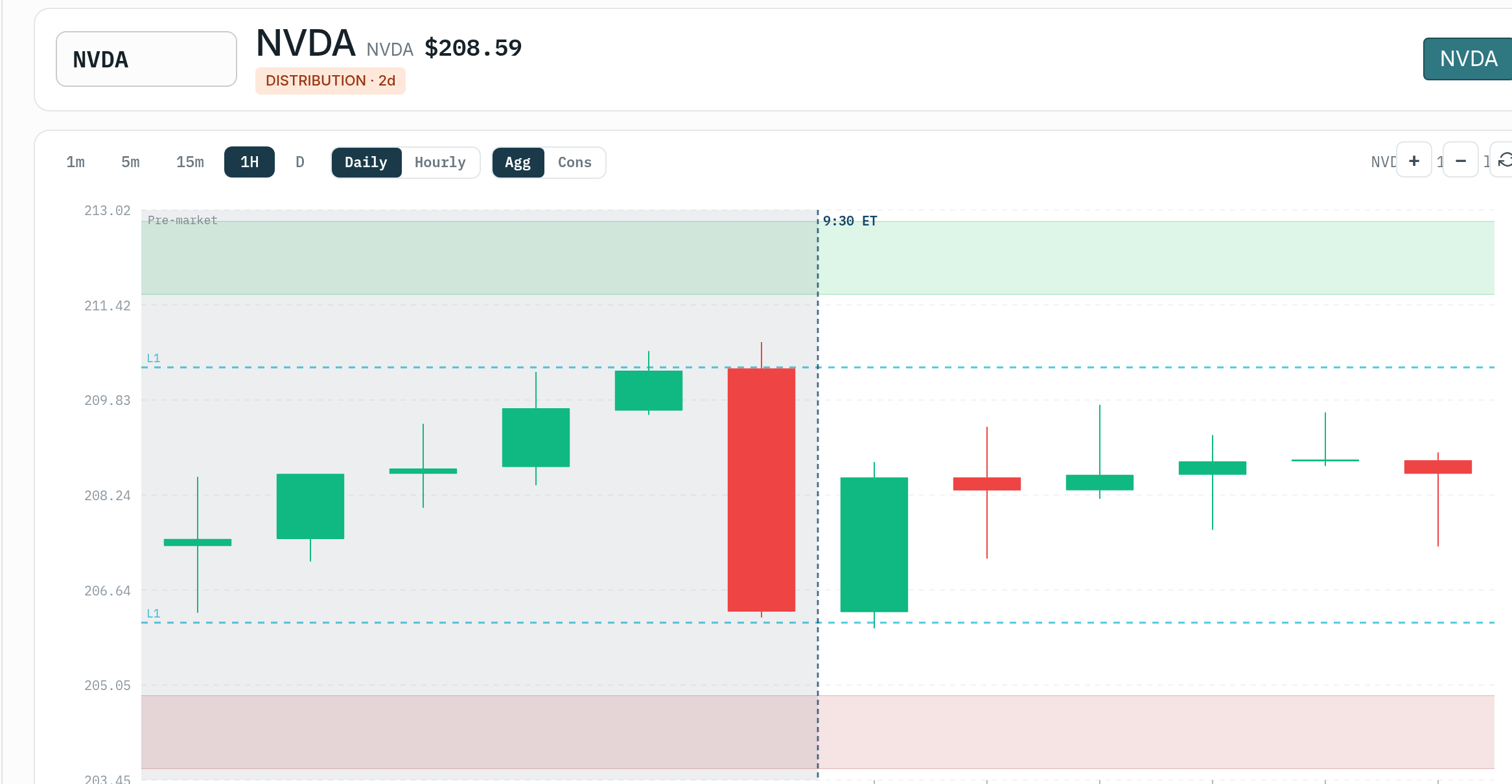
- Hourly models give a new level every hour, reading volatility in real time and surfacing more intraday opportunities.
Each model family has an aggressive and a conservative version. The aggressive levels are easier to reach; the conservative levels are wider and favored around earnings, FOMC, and naturally high-volatility names.
The weekly indicator bundle covers about 115 liquid symbols, the same list used in the platform, and is capped there because ThinkOrSwim performance degrades past roughly 100 symbols per file. More symbols are supported than ship in the default bundle; you can generate your own files for names outside it. The Scanner runs the models, breaches, and confluence layers across the supported universe and ranks the setups, which is what makes the stock product a scanning tool rather than a single indicator.
Futures Volatility Box
The Futures Volatility Box is the separate product for futures contracts. Futures trade across extended sessions rather than regular US equity hours, which is the main reason it exists as its own product rather than a setting inside the stock platform. Its contract coverage and model structure are specific to that product. Refer to the Futures Volatility Box product material for its exact contract list, model count, and platform support, since those are not the same as the stock figures above and are not documented here.
Choosing between them
Match the product to what you trade. If you trade stocks and ETFs and want a scanner that surfaces volatility setups across a broad universe on a daily and hourly basis, the Stock Volatility Box is the fit, and it is what this documentation describes. If you trade futures and need levels built around futures sessions, the Futures Volatility Box is the separate product to use. The read is the same on both; the coverage and the hours are what differ.
Related
Was this article helpful?
Still need help?
Can't find what you're looking for? Our support team is here to help.
Contact Support