Know which names deserve attention, before the open.
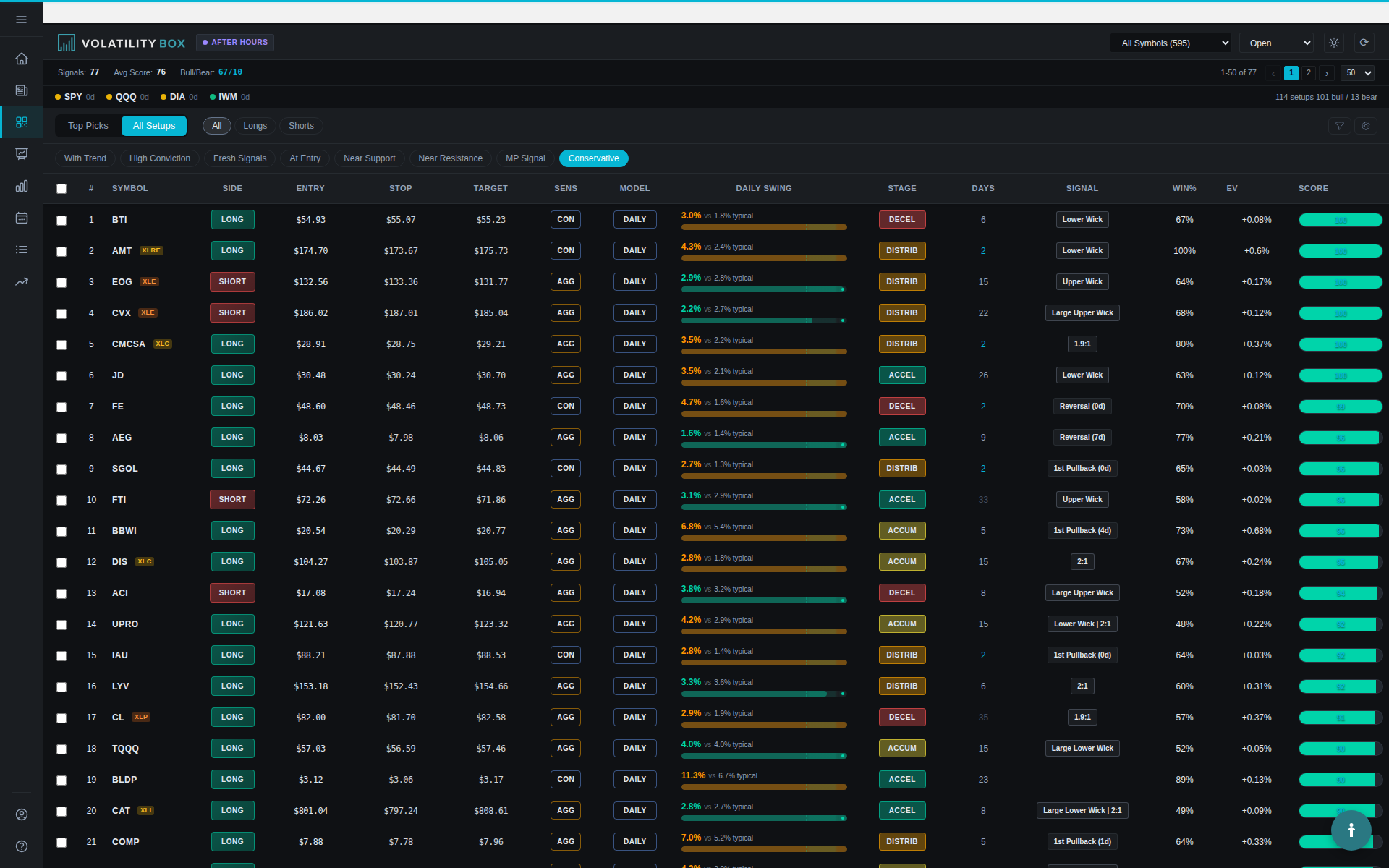
Daily VB Models give one level per stock per day, where price is stretched far enough that a reversal is more likely than usual. A daily level is harder to reach than an hourly one, so a tag carries more weight, and it suits trades that last one to five days. They come in conservative and aggressive variants, so you start each day knowing the names worth watching.
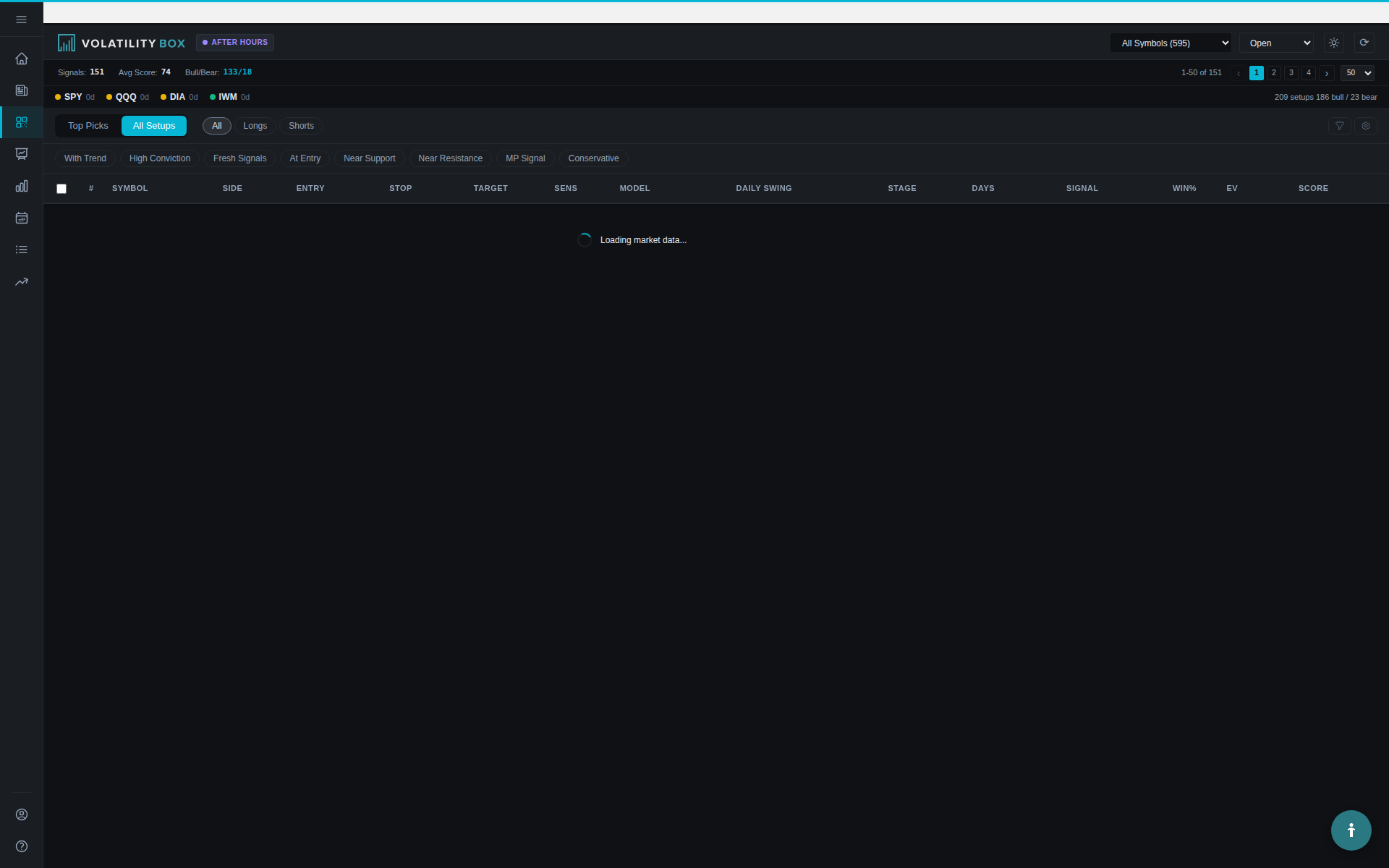
The day, framed before it starts.
A daily model marks each name's stretched levels for the session: the zones where price is likely to reverse. You get that picture before the bell, so you trade with a plan instead of reacting.
Where price tends to reverse
Each model marks the range edges where price has historically been likely to reverse, so you know your fade and target levels in advance.
A level with more weight
The daily level is harder to reach than the hourly, so when price tags it, the tag carries more weight. It suits trades that last one to five days.
Two sensitivities
Conservative uses wider bands for fewer, higher-conviction levels. Aggressive uses tighter bands that trigger more often. You pick the one that fits how you want to trade the session.
A shortlist by the open
Instead of scanning everything, you start the day with the handful of names the models say deserve your attention.
Conservative or aggressive, your call.
The conservative variant uses wider bands, so it only triggers on a larger move. That keeps your shortlist short and your attention on the cleaner, higher-conviction setups. Pick it if you would rather watch fewer names and act with conviction.
The aggressive variant uses tighter bands, so it reacts to smaller moves and surfaces more names each session, giving active traders a fuller field to work from. Lean on one variant or use both, depending on how much you want in front of you.
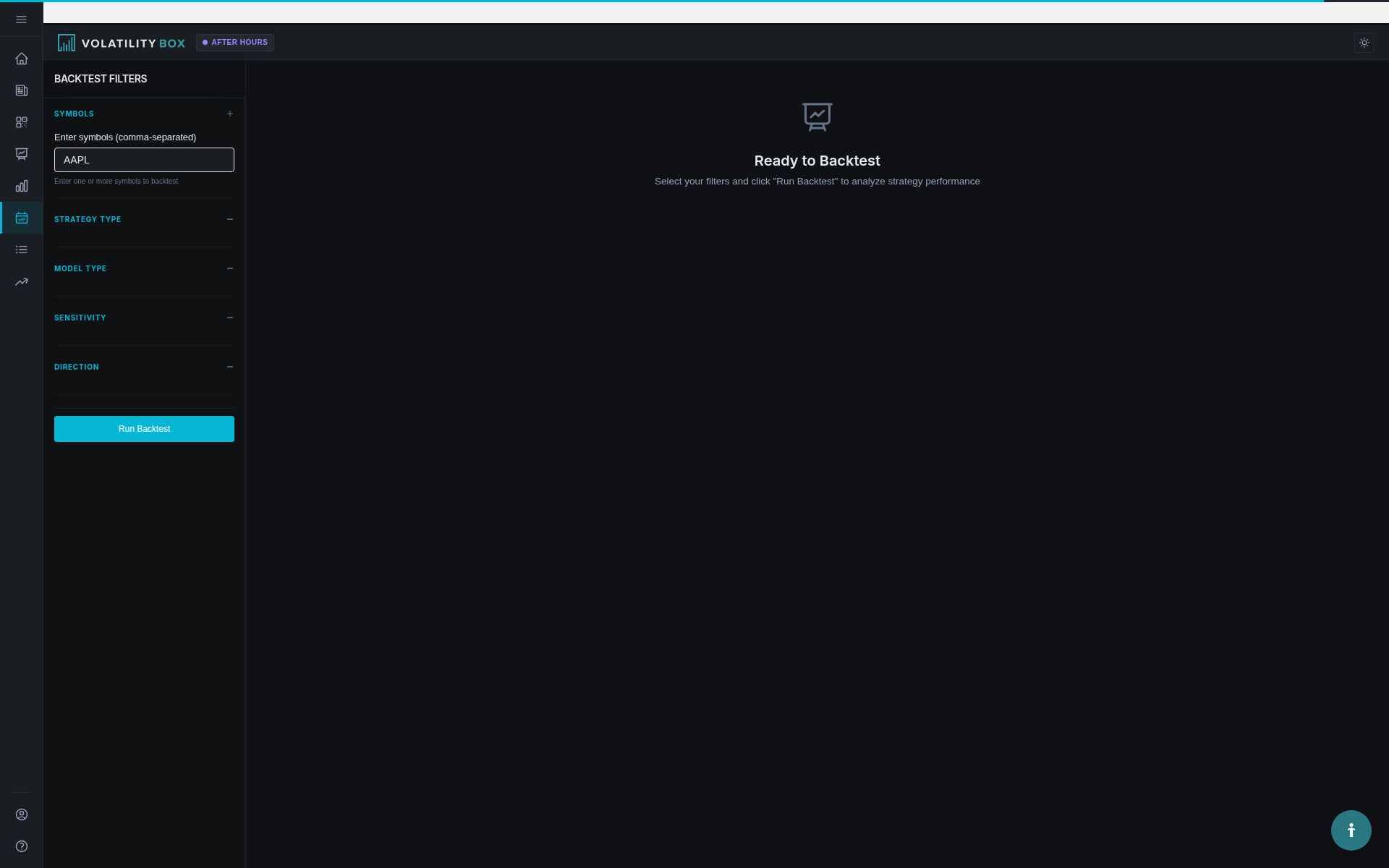
See how it held up, before you lean on it.
You do not have to take the read on faith. The same models can be backtested across hundreds of past sessions, so you can see how the levels held up once the day had already played out. That is how you build trust in a tool: check it against history first.
- Backtest across past sessions to see how often price reversed or kept trending at the model's levels.
- Compare the variants so you can decide which one fits the way you actually trade.
- Build your own confidence by validating the read against history, not marketing.
Knowing where to look.
Most mornings you face hundreds of names and limited attention. Daily VB Models do the first cut for you, framing the larger move so you spend your focus where it counts.
Start with a shortlist
Walk into the session with the names the models flag, instead of scrolling charts until something catches your eye.
Know the levels early
You see where price is likely to reverse before the open, so your targets and exits are planned, not improvised.
Trade your own style
Lean conservative when you want quality, lean aggressive when you want reach. The read adapts to how you trade.
What traders say.
Know which names deserve attention today.
Let the daily models frame the move, so you start the session with a plan.