Datadog at the edge: how the Volatility Box marked a record-high extreme in $DDOG
The chase into the edge
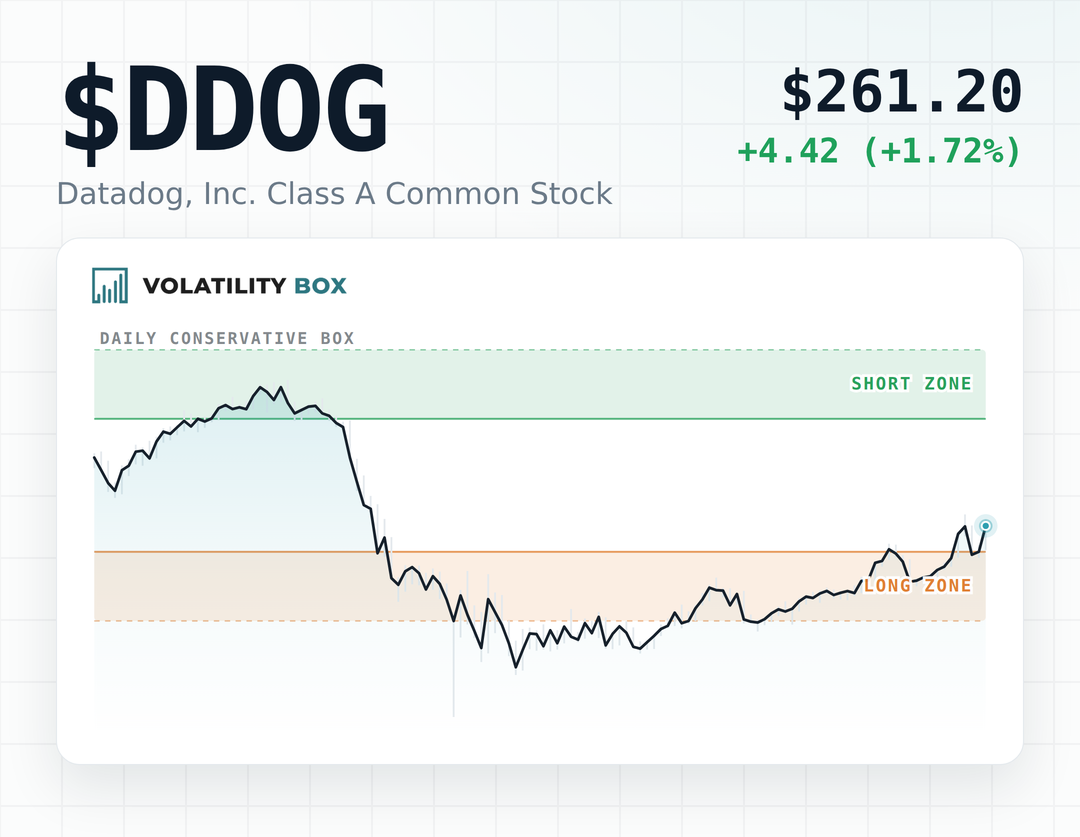
Datadog was one of the strongest names on the tape this week. The stock ran to record highs, up roughly 13% in a month, after it acquired Adaptive ML on July 1 to deepen its AI observability research and Benchmark lifted its price target to a Street-high $330 the very next day.
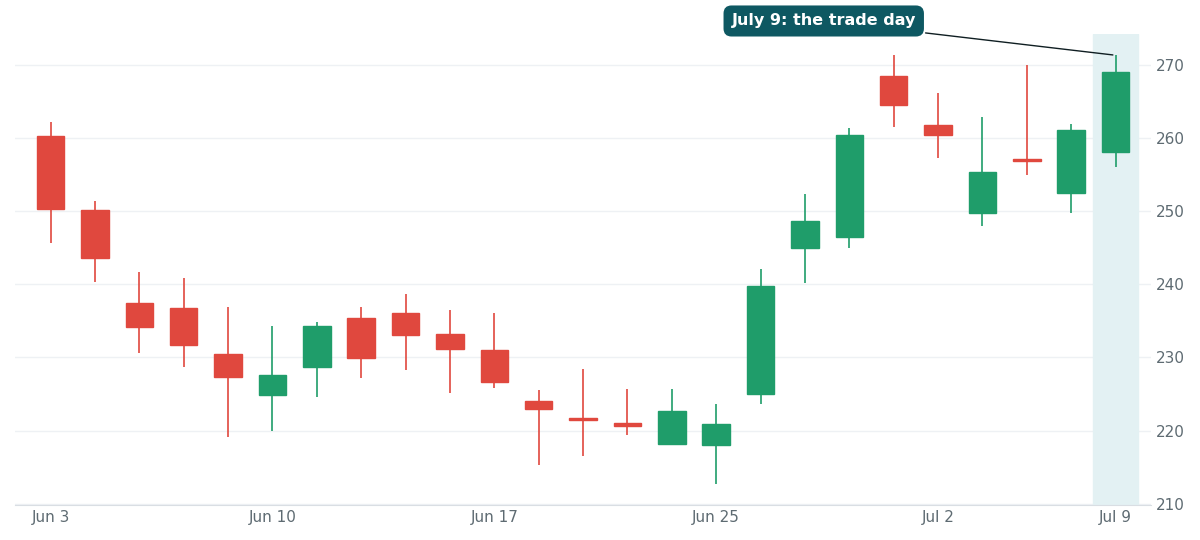
That is exactly the kind of run that carries even a leader to a statistical extreme. On our Daily Conservative model, $DDOG pushed into the upper edge of the Volatility Box, the zone where price is stretched relative to its own recent range, not where the story is wrong.
How the trade set up
Price tagged the L2 level of the Daily Conservative Volatility Box near $269.69. The Edge Signal confirmed the short there, the target at $267.62 hit 23 minutes later for about 1R, and the stop at $271.77 was drawn before the entry ever fired.
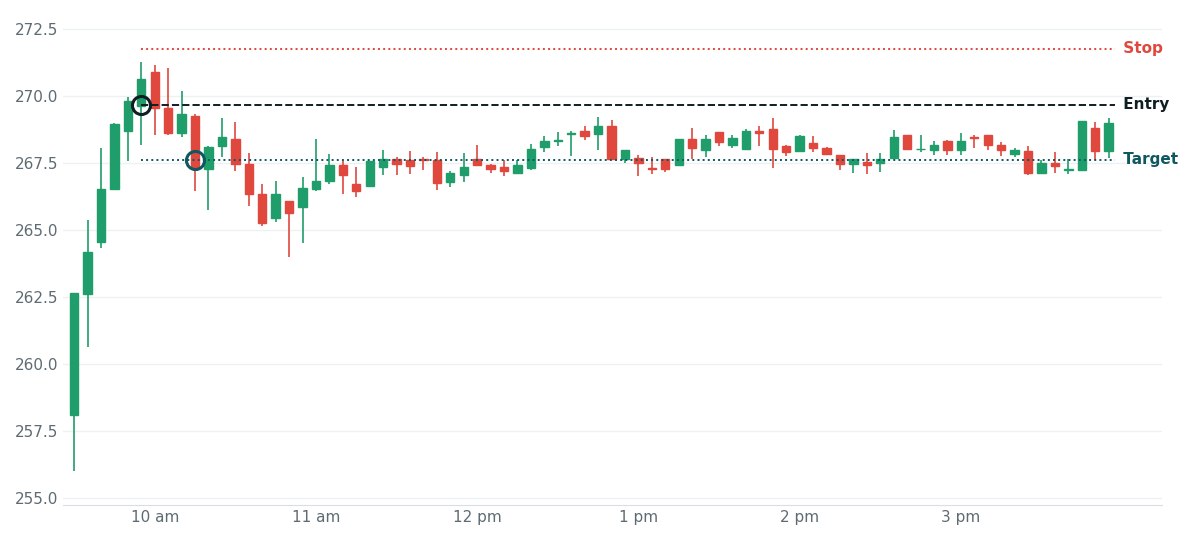
The realized move was small, about 0.8%. That is the point, not a caveat. The Volatility Box marks the level and the risk; the Edge Signal takes the entry. You get a defined-risk short with the exit set in advance, and it resolved fast.
The trade went against us first
This one was not clean from the start, and that is worth showing. Right after the 9:55 entry, $DDOG pushed up to $271.27, 50 cents under the stop. It held there for about ten minutes, then turned, and the $267.62 target hit at 10:18.
Being 50 cents from the stop is uncomfortable, and it is also exactly what the stop is for. It was placed where the idea would be wrong, not where it would feel safe. Price respected it, and the trade resolved on plan.
The record behind the edge
One trade is a demonstration, not the edge. The edge is the aggregate: the Edge Signal entries taken at the statistical level, measured across the full backtested record, with defined risk on every one.
The lesson
A price target tells you where a name might go over the next year. The Volatility Box tells you where it is stretched right now. Those two things are not a contradiction, and $DDOG showed why: a Street-high $330 target and a short off the upper edge can both be true on the same chart.
Upper cloud is the fade zone, lower cloud is the long zone. The job is to know which edge you are standing at, and to have the stop and target drawn before you take the trade.
| Date | Thursday, July 9, 2026 |
|---|---|
| Model | Daily Conservative Volatility Box |
| Level | Upper L2 |
| Direction | Short (counter-trend fade) |
| Entry | $269.69 at 9:55 a.m. ET |
| Stop | $271.77, set before entry |
| Target | $267.62 |
| Time to target | 23 minutes |
| Result | About 1R, a 0.8% move |
How the zones are drawn and read is covered in Reading the models.
What happened next
After the target, $DDOG kept fading to a low of $264.00 before drifting back to close at $268.99. The next session it dropped to $257.54, about 4.5% under the short entry, then bounced back to $270.73 by July 14.
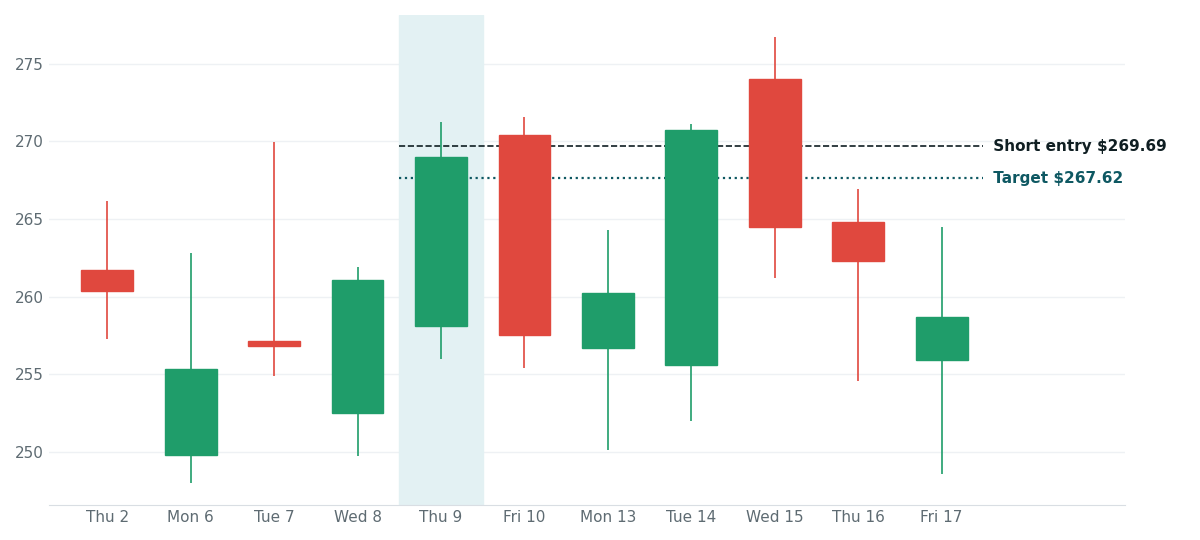
That round trip is the whole story of a stock at a record high with a Street-high price target: sharp pullbacks inside a strong trend. The Volatility Box gave a defined-risk short at the stretch, and the trend resumed a few days later. Both things were true.
Where Market Pulse stood
Market Pulse had $DDOG in an uptrend going into the week, with a long signal on June 26. A short at the upper Volatility Box zone in that setting is a fade, sized and timed as one: a 1R target, a stop drawn in advance, and no attempt to call the top.
The trend stages are explained in Market Pulse signals.
Questions traders ask about this setup
Why only 1R on this trade?
L2 is the first upper level, so the target back toward the middle of the range is closer. Deeper levels like L3 usually offer more room. The size of the target comes from the Volatility Box, not from what we hope the stock will do.
Should I short stocks at record highs?
Not as a rule. A record high is not a reason to short. A stretch to the upper Volatility Box with an Edge Signal is a reason to consider a short fade with a fixed target and stop. The trend can, and often does, resume afterward.
What is an Edge Signal?
It is the entry trigger that fires on top of a Volatility Box level. The Volatility Box tells you where price is stretched; the Edge Signal tells you when the move has started to turn there. Members see both on the same chart.